8th International Conference on Computing, Electronics & Communications Engineering
(iCCECE '26)
University of Bradford, UK |
 |
|
|
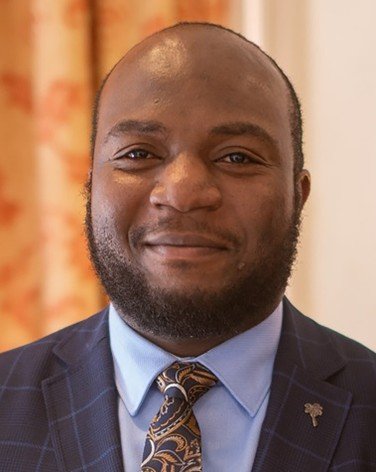
| Invited Speaker-1: Mobayode O. Akinsolu |
|
Biography: Dr. Mobayode O. Akinsolu is currently a Reader in Applied Artificial Intelligence and Electronic Engineering at Wrexham University, U.K. He also serves as a Visiting Scholar at Lead City University, Nigeria, and as an External Examiner at the Regional Maritime University, Ghana. His previous roles include serving as a Principal Investigator for a Data Study Group at The Alan Turing Institute, U.K., and holding research appointments at the Centre for Satellite Technology Development, National Space Research and Development Agency, Nigeria, and the RFID Research Centre (formerly hosted at the African University of Science and Technology), Nigeria. His research interests span antennas, applied artificial intelligence, machine-learning-assisted, simulation-driven optimisation, engineering management, and wireless communications. He is a Chartered Engineer, a Fellow of Advance HE, a Senior Member of IEEE, a Member of the IET, and a registered Electrical Engineer with COREN.
Title of Talk: Applied Machine Learning in Wireless Communications: From Intelligent Links to Automated Antenna Design
Synopsis of Talk: Machine learning (ML) has become a practical enabler for advanced wireless communication systems, supporting intelligent link adaptation, network optimisation, and accelerated radio frequency hardware design. This keynote examines the application of supervised, unsupervised, and reinforcement learning methods to real world wireless communication problems, including channel prediction, resource allocation, and interference management. The talk then connects these concepts to automated antenna design, demonstrating how ML assisted optimisation reduces the computational burden of full wave electromagnetic simulations and expedites high performance antenna synthesis.
|
|
|
|
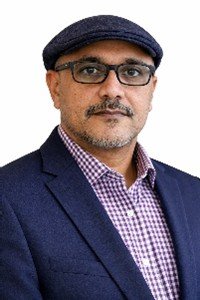
| Invited Speaker-2: Dr Omer Maki |
|
Biography: Dr Omer Maki is the Director of Space Systems Ltd, a UK-based space technology company specialising in the design, development, and manufacture of advanced small satellite systems and intelligent space solutions. Under his leadership, the company focuses on AI-enabled CubeSat technologies for satellite communications, Earth observation, and Internet of Things (IoT) applications, supporting both commercial and research-driven missions. Space Systems Ltd works with European Space Agency and collaboratively with universities, research institutions, and industrial partners across the UK and Europe to advance innovative space technologies and satellite-based services.
Dr Maki has a strong interest in satellite engineering, wireless communications, and the integration of artificial intelligence into next-generation space systems. His work promotes the development of intelligent satellite platforms capable of enhancing communication networks, environmental monitoring, and data-driven decision-making. As Director, he is committed to translating research and innovation into practical space solutions that address emerging technological and societal challenges.
In addition to leading Space Systems Ltd, Dr Maki actively supports collaborative research and technology development initiatives, fostering partnerships between academia and industry. His vision is to advance accessible, reliable, and sustainable space technologies that contribute to the continued growth of the UK and international space sectors while inspiring innovation in satellite engineering and emerging aerospace applications.
Title of Talk: Climate Resilience Integrated multi-hazard Sensing & Insights Platform (CRISP)
Synopsis of Talk: The talk will cover the CRISP (Climate Resilience Integrated Multi-hazard Sensing & Insights Platform) as an innovative satellite-enabled platform that delivers rapid, decision-ready intelligence for climate resilience, initially targeting Andalucía, Spain, with scalability across Europe. The system integrates onboard satellite intelligence, ground-based IoT sensors, and historical datasets to monitor hazards such as floods, wildfires, and drought in near real time. Unlike conventional monitoring systems, CRISP performs onboard analysis to prioritise critical events, generate alerts, and trigger follow-up observations, supported by dual-band Ku/Ka communications. A cloud-based platform fuses satellite, IoT, and historical data to provide actionable insights through web applications, mobile interfaces, and APIs for farmers, water authorities, emergency services, and insurers. Aligned with the ESA Phi-Lab Spain programme, CRISP aims to deliver a validated TRL4 prototype, enabling commercial deployment while strengthening climate resilience, operational efficiency, and sustainable economic growth across Spain and Europe.
|
|
|
|
| Keynote Speaker-1: Professor Rami Qahwaji |
|
Biography: Professor Rami Qahwaji is a Professor of Visual Computing, with internationally recognised expertise in AI, computer vision, medical imaging and digital health, satellite and space imaging, and data visualisation. He has led high-impact research collaborations with NASA, ESA, NHS, and various SMEs. Notably, he led the development of an AI-based space weather prediction system, now integrated into NASA's Community Coordinated Modeling Center (CCMC). This system supports radiation management for missions such as the Chandra X-ray Observatory and was featured as a 100% internationally excellent (3*) impact case study in the Research Excellence Framework (REF) 2021. Professor Qahwaji also serves as the Unit of Assessment Coordinator for Computer Science and Informatics (B11) for both REF2021 and REF2029.
He has secured multi-million-pound research funding from UKRI, ESA, H2020, NHS, etc. He is the knowledge base lead and supervisor for the three-year KTP with Vision Surgery (June 2022 -- June 2025), which led to the launch of the startup CustomLensAI Ltd (https://customlens.ai/). His involvement in H2020 projects includes collaborations with SMEs such as SARAS Technology (UK), Acticom GmbH (Germany), and Iquadrat (Spain). He has led NHS-funded research into efficient 3D corneal modelling with partners including Weill Cornell Medical College, the University of Manchester, and Manchester Royal Infirmary-advancing AI-assisted medical diagnostics.
Professor Qahwaji was Academic Director of the Digital Catapult Centre Yorkshire (2015--2018) and led the Healthcare Technology Unit within the GBP 13M Digital Health Enterprise Zone (DHEZ). He currently chairs the University's Computing Industry Advisory Board. He holds PhD in AI and Visual Computing and is a Fellow of the IET, a Chartered Engineer (CEng), and a Fellow of the HEA. A founding member of the IET Healthcare Sector Executive Committee and IET technical assessor, he has published over 150 peer-reviewed papers, delivered numerous keynotes, and supervised more than 40 PhD students.
Title of Talk: Engineering a CubeSat, Inspiring a Generation: Bradford's Award-Winning UKSEDS Project
Synopsis of Talk: A multidisciplinary student team from the University of Bradford designed, built and tested a 3U CubeSat prototype for the UKSEDS Satellite Design Competition, hosted by Airbus Defence and Space. The project won both the Best Satellite Award and the Best Outreach Award, recognising excellence in engineering and public engagement.
The CubeSat integrated LiDAR-based 3D sensing, imaging, attitude control and wireless communication technologies to support mapping, environmental observation and mission operations. The team applied systems-engineering principles to manage the complete development process, including mission design, subsystem integration, testing and final demonstration.
Alongside the technical work, the students delivered an outreach programme that engaged more than 2,000 primary and secondary school students through satellite-design workshops, Earth-observation activities and rocket demonstrations.
This presentation will introduce the CubeSat mission, explain its main technologies and development challenges, and share the key lessons learned from teamwork, testing and system integration. It will also demonstrate how a student satellite project can create impact beyond the competition by connecting engineering education, industry engagement and STEM outreach.
|
|
| International Association for Educators and Researchers (IAER), registered in England and Wales - Reg #OC418009 Copyright © IAER 2026 | |
|